Short answer
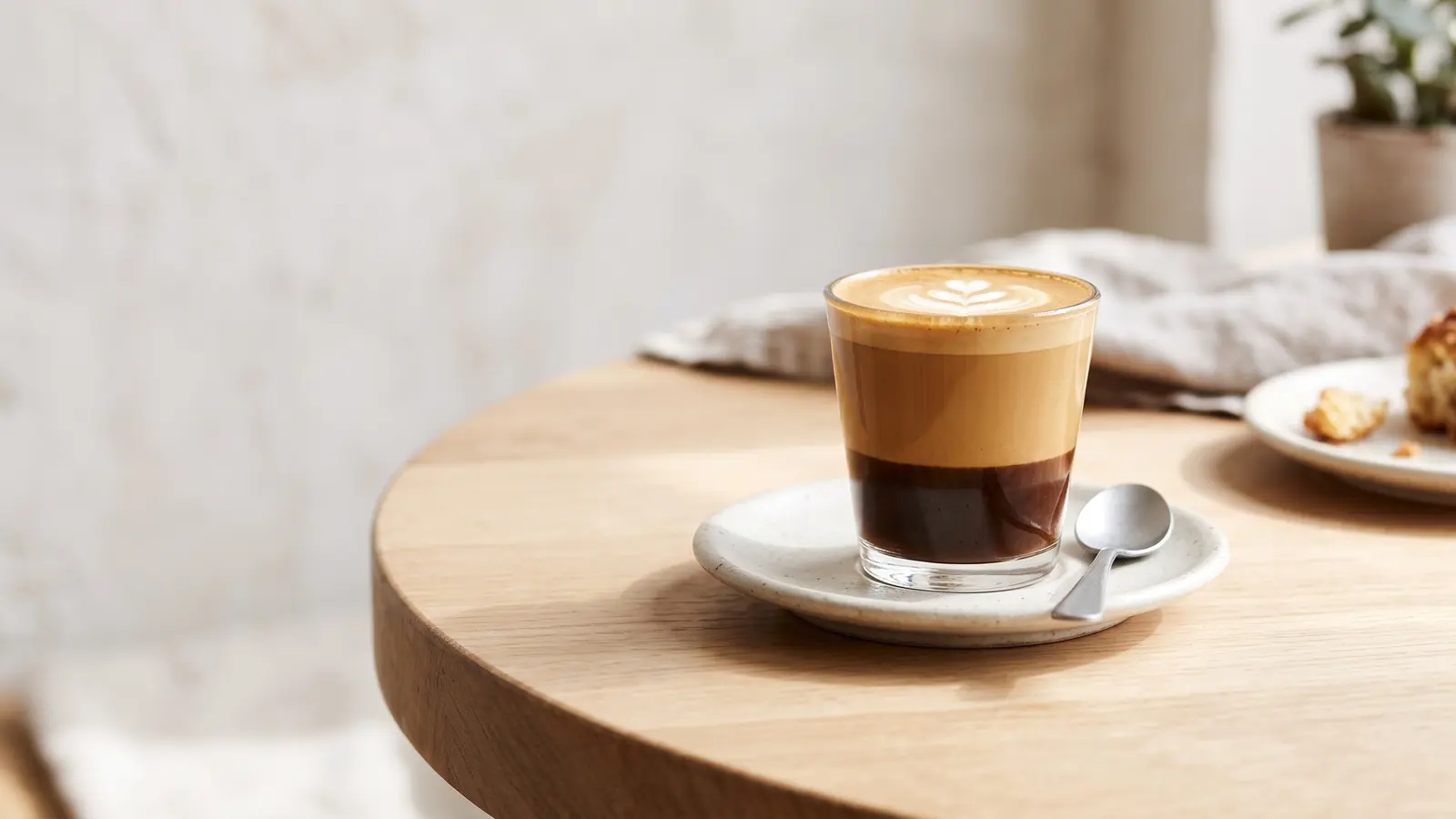
A cortado is a small espresso drink made by cutting a double shot with about an equal amount of warm milk. It is stronger and less milky than a latte, and it is served in a small glass or cup.
A cortado is a small espresso drink made by cutting a shot of espresso with about an equal amount of warm milk, which softens the coffee’s bitterness and acidity without turning it into a milky drink. It is served in a short glass or small cup, and it sits between a straight espresso and a latte in strength and size.
What is a cortado?
A cortado is espresso mixed with roughly the same amount of warm milk in a small cup. The milk is steamed or warmed with little or no foam, so the drink is smooth and flat on top rather than foamy.
The word is the past participle of the Spanish verb cortar, to cut, so a cortado is a “cut” coffee. The point of the milk is not to make the drink sweet or creamy. It is to take the sharp edge off the espresso and leave the coffee flavor in front.
Most cafes build a cortado on a double shot. The menu at Momona Bakery And Coffee Shop describes its cortado the same way, as a 4 oz double shot with equal steamed milk. That wording is a good definition to carry into any coffee shop.
Where does the cortado come from?
The cortado comes from Spain, where the name and the style are long established, and it is also common in Portugal and in Latin American countries. The exact date and place of its start are not documented, and the drink is better described as a traditional way of serving coffee than as a recipe with a known inventor.
In Spain, café cortado is an ordinary order at a cafe, usually served in a small glass. The same name appears in Cuba, where a cortadito is made with sweetened milk. Portugal has a related drink, the pingado, which is an espresso with a drop of milk.
Specialty coffee shops in North America took up the name in the 2000s and 2010s, and many now serve it as a standard option. Their versions may differ from the Spanish cafe version in size, glassware and milk texture, but the idea of an espresso cut with milk is shared.
What does a cortado taste like?
A cortado tastes like espresso with the roughest edges smoothed out. It is bold, slightly sweet from the warm milk, and less bitter than a straight shot, with a short, clean finish.
You still taste the roast. A dark roast will taste chocolatey or smoky, and a lighter roast will show fruit or acidity, and in both cases the milk rounds the flavor instead of hiding it. That is why many coffee drinkers who find a latte too mild and an espresso too sharp end up preferring a cortado.
The texture is silky and thin rather than thick. Because the milk has little foam, you do not get the dense, milky mouthfeel of a cappuccino.
How big is a cortado, and how much caffeine does it have?
A cortado is a small drink, usually about four ounces in total, though sizes vary by cafe. It is far smaller than a latte, which is often served in a cup of twelve ounces or more.
Caffeine in a cortado depends on the number of espresso shots and how they are pulled, not on the milk. A double-shot cortado contains about the same espresso as a double-shot latte or a double-shot flat white. The cortado simply spreads that coffee over a smaller volume, so it tastes stronger.
If you want a lighter drink, ask for a single shot. If a cafe offers only one standard build, it is worth asking whether its cortado is a single or a double.
How is a cortado different from a flat white, latte, macchiato and Gibraltar?
A cortado has less milk than a flat white or a latte, more milk than a macchiato, and almost no foam. The Gibraltar is a close relative that is mostly a cortado served in a particular glass.
| Drink | Espresso | Milk | Foam | Typical size | Taste |
|---|---|---|---|---|---|
| Cortado | Double shot | About equal to the espresso | Little to none | Small, about 4 oz | Strong, smooth |
| Flat white | One or two shots | More than a cortado | Thin microfoam | Medium | Coffee-forward, creamy |
| Latte | One or two shots | Much more | Thin layer | Large | Mild, milky |
| Macchiato | Single or double | Only a spoonful | A dollop of foam | Very small | Very strong |
| Gibraltar | Double shot | About equal | Little | Small glass | Like a cortado |
The names are used differently from place to place. A “macchiato” at a large chain can be a big sweet milk drink, which is a different thing from the traditional espresso macchiato. If you want to be sure of what you will get, look at the cup size and the cafe’s description rather than relying on the name alone.
The Gibraltar is associated with San Francisco specialty coffee, where it is served in a small tumbler of a type called a Gibraltar glass. In practice it is often described as a cortado by another name, which is why menus rarely list both.
Cortado vs flat white: which should you order?
Order a cortado if you want the coffee to taste strong and the milk to stay in the background. Order a flat white if you want a little more milk and a creamier texture, while still keeping the coffee flavor clear.
The difference is partly size. A flat white is usually bigger than a cortado, so it contains more milk and tastes gentler. The milk texture also differs. A flat white is made with a thin layer of microfoam that blends into the drink, while a cortado has even less texture.
Both are good choices for someone who wants to move from a latte toward a stronger drink without going straight to espresso.
How do you order a cortado?
Say “a cortado” and, if the cafe has a choice, say whether you want it hot and whether it should be a double. Most places will serve it without further questions.
A few things help:
- Ask for a double if you want the standard strength, and a single if you want it lighter.
- Ask for oat, almond or another milk if you do not drink dairy, and expect the taste to change slightly.
- Order it for here if you can. A cortado cools quickly in a small cup, and it tastes best in the first few minutes.
- Do not ask for it iced unless the cafe offers that, because the small volume dilutes quickly over ice.
How much does a cortado cost at Momona Bakery And Coffee Shop?
The Cortado is $4.75 on the online ordering page of Momona Bakery And Coffee Shop in Kahului, Maui, as of November 2026. The page describes it as a 4 oz double shot with equal steamed milk.
The same page lists other espresso and milk drinks for comparison, as of November 2026:
| Drink on the online ordering page | Price | Notes from the page |
|---|---|---|
| Espresso | $3.99 | 4 oz double shot |
| Cortado | $4.75 | 4 oz double shot with equal steamed milk |
| Flat White | from $5.99 | Espresso with steamed milk and microfoam |
| Latte | from $5.99 | Espresso and steamed milk, flavors can be added |
A “from” price means the page shows a plus sign, so larger sizes or add-ons cost more. All coffee at the shop uses its Momona Blend of Colombian beans roasted on Maui. The shop is open Monday to Friday 6 AM to 3 PM and Saturday and Sunday 6:30 AM to 3 PM, according to its Google Maps listing, though its online ordering page showed Monday to Friday 8:00 AM to 2:30 PM. See the hours and location page and the menu. Prices can differ in person, so confirm on (808) 214-5389 if you plan a trip around one.
How do you make a cortado at home?
To make a cortado at home, pull a double shot of espresso into a small glass and add an equal amount of warm milk. You do not need much equipment for the milk, because the drink works with lightly heated milk with a small amount of texture.
The basic steps:
- Pull a double shot of espresso into a small glass or cup.
- Heat an equal amount of milk until it is hot but not boiling.
- Froth it lightly, or just whisk it, so it has a smooth texture with only a thin layer of foam.
- Pour it into the espresso and drink it promptly.
Without an espresso machine, a moka pot makes a strong, concentrated coffee that can stand in for the espresso, and an AeroPress can make a similar concentrate. The result will not be identical to a machine-pulled shot, but the proportions of strong coffee to warm milk will give a similar drink.
The two details that matter most are the milk temperature and the ratio. Overheated milk goes flat and sweet in a bad way, and too much milk turns the drink into a small latte.
What mistakes should you avoid with a cortado?
The common mistakes are using too much milk, serving it too hot, and building it on a weak or old shot. A cortado has nowhere to hide, because there is so little milk in the cup.
- Too much milk. If the cup is more than half milk, it is a small latte, not a cortado.
- Scorched milk. Milk that is heated past roughly steaming hot turns flat and loses its natural sweetness.
- Stale coffee. The drink is mostly espresso, so old beans or a poorly extracted shot will be obvious.
- Heavy foam. Thick foam makes it feel like a cappuccino, which is a different drink.
- Waiting too long. In a small cup, the drink cools fast, so drink it soon after it arrives.
If you order one in a new cafe and it tastes too sharp, ask for a little more milk next time. If it tastes weak, ask for a double shot, since a single shot with the same milk will taste thin.
Common questions
What does cortado mean?
Cortado comes from the Spanish verb cortar, to cut. The espresso is cut with milk to soften its bitterness and acidity.
Is a cortado stronger than a latte?
It tastes stronger because there is far less milk in the cup. The caffeine depends on how many shots each drink contains, not on the milk.
Is a cortado the same as a macchiato?
No. A traditional macchiato is espresso marked with only a spoonful of foam, so it has much less milk than a cortado, which uses about equal parts espresso and warm milk.
Is a cortado hot or cold?
It is normally served hot. An iced version is possible, but the drink is defined by warm, lightly textured milk.
Can you make a cortado without an espresso machine?
Not exactly, but a moka pot or an AeroPress can make a concentrated coffee that stands in for the espresso, with warm milk added in roughly equal amounts.
For the address, opening hours and menu, see Momona Bakery And Coffee Shop in Kahului.
This article is general information from an independent guide, not from Momona Bakery And Coffee Shop itself. For the store’s current details see hours and location.